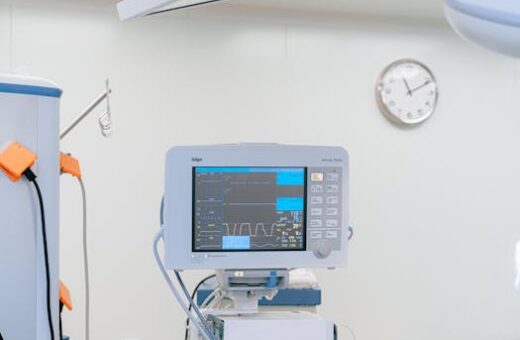
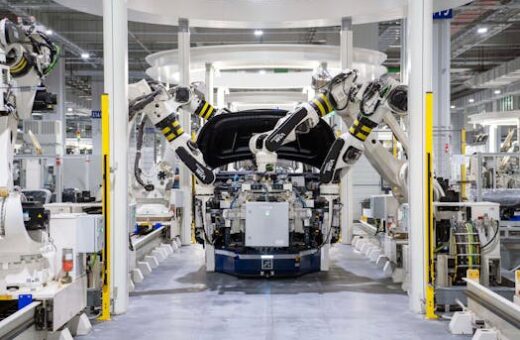
As more devices connect daily, the promise of 5g iot stands to profoundly shift how technology integrates into our lives. This next generation of connectivity offers reliable, fast, and low-latency communications necessary for large-scale smart device networks.
Many businesses face practical limits with current internet speeds, resulting in lagging data, unreliable monitoring, and stalled automation. These challenges restrict scalability and user experience, especially for mission-critical IoT applications.
Some assume upgrading to 5g iot is expensive or impractical for everyday uses. In reality, new infrastructure and mass device adoption are rapidly driving down costs and increasing accessibility.
By exploring the coming changes, this article will outline how industries, cities, and homes can benefit from 5g iot, and offer actionable insights for leveraging its advantages.
Seamless Connectivity: Transforming Device Networks
With 5g iot, device connections are expected to scale massively. Billions of sensors can work harmoniously, empowering industries to automate and optimize every stage of operation.
Unlike past networks, 5g iot removes many data bottlenecks, making it possible for smart factories, smart homes, and connected cities to flourish without delay or network overload.
Reduced Latency and Greater Reliability
Lower latency improves response time. 5g iot reduces this to milliseconds, ideal for autonomous vehicles, robotics, or remote healthcare, where instant decisions are vital.
Higher network reliability ensures connected devices stay online. Outages plaguing legacy wireless technology can be minimized, providing more robust automation in demanding settings.
Counterintuitively, more devices can mean less congestion with 5g iot, if network slicing and prioritization are properly set up.
If network slicing is skipped, congestion persists. Recover quick by configuring device priorities. Say: “Let’s update our allocation for critical traffic first so all devices stay responsive.”
Enabling New Industry Applications
Industries can leverage real-time monitoring and predictive maintenance thanks to 5g iot. Smart grids, logistics, healthcare, and manufacturing can run smarter and proactively reduce downtime.
Connected cars use low latency for safe navigation. Most systems run on 4G, but upgrading to 5g iot delivers stable, rapid communications essential for self-driving fleets.
Unlike before, tools like digital twins offer constant feedback loops through 5g iot, transforming real-world objects into live data sources for analysis and control.
To enable these use cases, teams must pilot new apps, evaluate costs, and establish best practices for ongoing optimization as adoption widens.
Edge Computing and Real-Time Decision Making
Edge computing becomes practical at scale with 5g iot, allowing data to be processed closer to where it is generated for real-time insights and localized decision-making.
Lowering reliance on the central cloud reduces delays and bandwidth usage, making applications like augmented reality (AR) and smart surveillance far more responsive.
Bringing Intelligence Closer to Devices
For businesses, processing data locally with edge servers means less traffic travels to distant data centers, decreasing cost and improving speed for time-sensitive operations.
Sensors in factories or cities can analyze and act on information immediately, improving safety, efficiency, and user experience in critical moments.
If all data is sent to the cloud, slowdowns may occur. Instead, prioritize which data stays local versus which travels to central servers for further analysis.
Should a device freeze due to an overload, try: “Let’s split the analytical workload. Keep key alerts local and sync the rest with our primary server later.”
Applications Leveraging Edge Intelligence
Video analytics, smart meters, and drones all exploit 5g iot to process feeds in real-time, flagging risks or insights immediately with less lag than previous networks.
Surprisingly, smart cameras can now alert teams to hazards as they happen, in contrast to older systems that might take minutes or hours to review data remotely.
To achieve real-time control, companies should map out which processes must occur at the edge and which can remain cloud-based for optimal resource allocation.
Ongoing collaboration between IoT and IT teams ensures that systems stay up to date and can adapt quickly to new business requirements and unexpected surges in traffic.
5G IoT and the Future of Smart Cities
5g iot technology is enabling cities to rapidly advance in efficiency, safety, and sustainability. Street lights, waste bins, traffic signals, and infrastructure all communicate seamlessly with central control systems.
This shift improves energy management, reduces traffic jams, and optimizes emergency response. Residents can benefit from cleaner air, safer transport, and smarter utilities every day.
Connecting Urban Infrastructure
5g iot supports millions of devices in dense environments without slowing down. Smart traffic systems adapt to vehicle flow, reducing congestion and travel time for commuters.
Public transportation leverages real-time data for arrivals and smart ticketing, making journeys more predictable. These solutions drive cost savings while improving satisfaction for residents.
If a city neglects device maintenance and updates, sensors may provide outdated data. Restore accuracy by scheduling regular checks and using automated alerts: “Please schedule a sensor test every two weeks,” is a useful approach.
Integrating private/public networks ensures resilient operations, even in emergencies. This protects communication between first responders and critical city services.
Enhancing Sustainability and Public Services
With 5g iot, utilities can monitor pipelines and grids proactively. Leak detection and efficient load balancing lower operational costs and environmental impact significantly.
Smart waste management uses sensor-enabled bins to notify crews only when full, cutting unnecessary routes. This drives emission reductions and resource optimization across urban logistics.
Cities adopting intelligent traffic management see gains in safety and reduced pollution through coordinated signals based on real-time density data sent via 5g iot-connected devices.
Remote health tools allow vulnerable residents to receive timely care in emergencies, further supporting public health outcomes.
Revolutionizing Consumer Experiences and Daily Life
5g iot will not only impact industries. It is poised to dynamically transform daily routines for individuals, through smarter appliances, entertainment, and connected environments at home and beyond.
Users benefit from more reliable video streaming, immersive entertainment, and automation, while emergency alerts and healthcare devices become more responsive and effective through continuous connectivity.
Smart Home Automation and Security
Smart home hubs use 5g iot to connect lights, locks, and alarms instantly. Homeowners can control systems remotely via apps, gaining peace of mind and convenience anywhere.
Advanced sensors detect glass breakage or leaks, triggering mobile notifications and security calls in seconds. These improvements minimize risks and property damage, providing timely interventions.
If an alarm fails during an outage, always include a battery backup and set automated alerts: “Enable backup for mission-critical devices,” keeps security top priority during network transitions.
Integration with voice assistants and mobile routines empowers seamless energy management, lighting, and media control for personalized living spaces.
Enabling Wearables and Personal Health Monitoring
Wearables leverage 5g iot to sync health data in real-time with providers and wellness apps. This enables proactive care, fitness feedback, and timely incident reporting for safety.
Remote patient monitoring means medical practitioners can intervene earlier, reducing trips to healthcare centers and improving quality of life for users managing chronic conditions.
Unexpected technical glitches can disrupt data transmission. Troubleshoot quickly: “Check the device’s recent sync logs and refresh the network link for stable, continuous monitoring.”
In the future, expect even more advanced features—like real-time ECG or fall detection—supported by the high bandwidth and reliability of ubiquitous 5g iot coverage.
Security and Privacy Challenges with 5G IoT
While the benefits of 5g iot are considerable, so are the associated security and privacy challenges. More connected devices create a larger attack surface for cyber threats.
Organizations and consumers must address device authentication, secure firmware updates, and data encryption to ensure privacy and business continuity in an interconnected environment.
Emerging Risks and Solutions
Real-time threat detection systems must evolve alongside 5g iot. Multi-factor authentication, network segmentation, and regular vulnerability scans are crucial countermeasures for modern environments.
Relying solely on default device settings often leaves systems exposed. Instead, customize device permissions and limit access to only essential apps and networks.
Develop a proactive incident response plan. If suspicious activity is detected, say: “Isolate the affected device and reset access credentials—then run a complete system assessment immediately.”
Security teams should regularly audit IoT environments, remediating outdated firmware and adjusting policies for new threats as technology and attack methods evolve.
Safeguarding User Data
Device manufacturers must adopt privacy-first design principles for all 5g iot products. Consumers also need clear guidance on enabling secure cloud backups and opting out of unnecessary data sharing.
Data encryption, both in transit and at rest, is a non-negotiable baseline for all connected devices in any industry or home environment.
Should sensitive data leak, act quickly: “Revoke device permissions, notify affected users, and begin a transparent communication plan for compliance and trust restoration.”
Continuous education for users strengthens system resilience, helping to foster an ecosystem where privacy and robust security are top priorities for all stakeholders.
5G IoT by the Numbers: Growth, Adoption, and Use Cases
5g iot growth is set to accelerate rapidly over the next decade. Adoption rates continue to climb as infrastructure strengthens and costs decrease for businesses large and small.
Below is an informative table highlighting global trends, adoption statistics, and high-impact use cases in key sectors:
| Metric | 2022 Value | 2026 Forecast | Key Industries |
|---|---|---|---|
| Connected IoT Devices | 11.3 billion | 23.9 billion | Manufacturing, Healthcare, Smart Cities, Retail |
| 5G Market Penetration | 18 percent | 76 percent | Telecom, Automotive, Logistics |
| IoT Data Traffic Growth | 5 Exabytes/month | 17 Exabytes/month | Utilities, Consumer Electronics |
| Average Latency | 35 ms | 1 ms | Autonomous Vehicles, AR/VR |
Key use cases harnessing these advances include real-time industrial automation, fleet management, precision agriculture, predictive healthcare, and immersive retail experiences enabled by augmented reality.
For the average consumer, this means homes and vehicles become smarter, safer, and more connected than ever before, delivering daily improvements in convenience and personalization through 5g iot networks.
Ongoing investment in 5g iot ensures new sectors can join the revolution, driving greater economic value and sparking new business models centered around ultra-reliable connectivity and deep data insights.
Innovative service models from carriers and integrators are streamlining enterprise adoption, lowering deployment risks and making it easy to join the connected ecosystem.
What to Expect: Steps to Prepare for 5G IoT Integration
Organizations and consumers eager to embrace 5g iot should begin preparations on several fronts to secure maximum benefits and a smooth transition to next-generation capabilities.
Below is a list of actionable steps every adopter should follow to ensure readiness and ongoing success with 5g iot initiatives:
- Audit current devices and network infrastructure for compatibility with 5g iot standards, identifying necessary upgrades and opportunities for integration efficiency.
- Train staff or family members on the safe use of new devices, focusing on privacy features and access controls vital for maintaining information security and safety.
- Collaborate with solution providers to co-design pilot projects, ensuring customization and measurable ROI for industrial or home IoT deployments using 5g iot networks.
- Establish ongoing monitoring and maintenance routines for all connected devices to prevent downtime, catch vulnerabilities early, and optimize performance continuously.
- Stay alert to regulatory updates, so devices and deployments remain compliant with changing standards for privacy, security, and data sovereignty as rules evolve worldwide.
Being proactive in these areas helps future-proof organizations and individual users, preventing setbacks and unlocking the full suite of possibilities as 5g iot matures on a global scale.
Conclusion
Embracing 5g iot calls for an ongoing commitment to upgrading infrastructure, securing devices, and collaborating across teams—to make the most of transformative technology in every sector.
Following a phased approach enables organizations and consumers to stay ahead, optimize daily routines, and realize greater efficiencies as 5g iot adoption expands worldwide.
The biggest pitfall? Underestimating ongoing maintenance. Regular updates and active monitoring prevent small issues from growing into major disruptions as systems grow more interconnected.
Set a recurring reminder: “Review and refresh connected device settings monthly to ensure your IoT environment stays secure, optimized, and ready for the future.”