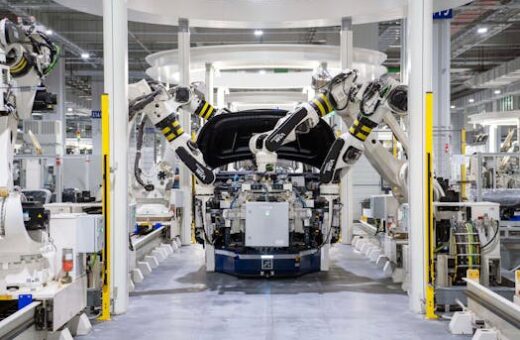
Advancements in computing power are enabling the future of artificial intelligence to impact global industries significantly and reshape our daily experiences in ways previously unimaginable.
Businesses and consumers alike are seeing innovative applications emerge, but adjusting to the rapid pace of new technology can be a challenge for many stakeholders navigating this shift.
Some believe artificial intelligence only automates repetitive tasks, missing its broader potential to drive creativity, insight, and problem-solving at every level of society and commerce.
This article offers practical insights and actionable examples to help readers understand, embrace, and prepare for the transformative effects of artificial intelligence around the globe.
Transforming Global Economies and Job Markets
Artificial intelligence is set to redefine job roles while introducing new types of work worldwide. Automation and smart systems are streamlining complex business operations and driving efficiency.
However, as AI takes over repetitive work, businesses are now upskilling employees to fill positions requiring creativity and emotional intelligence. Adaptation has become essential for career resilience.
Societal and Workforce Adaptation
To thrive, workers must embrace lifelong learning as AI evolves. Reskilling programs and digital training are becoming mandatory in many industries to keep up with new demands.
An unexpected benefit has been the creation of entirely novel sectors focused on managing AI-driven tools, opening roles such as AI ethicists and trainers.
When employers skip workforce retraining, productivity lags and teams struggle with uncertainty. In some cases, morale dips before adaptation measures are implemented.
To recover from this, leaders could say: “We’re investing in new opportunities. Let’s collaborate on upskilling and shape our future together.” This approach helps restore confidence.
Innovative Tools Reshaping Jobs
Automation platforms are now mainstream, allowing teams to focus on strategy rather than manual tasks. Smart chatbots and predictive analytics fuel decision-making and customer engagement.
Cloud-based AI solutions are now supporting distributed teams globally. Importantly, most people try to learn every tool at once, but focusing on one impactful platform yields better mastery.
Instead of jumping between apps, users should pick a core solution and invest in skill-building. This concentrated effort accelerates meaningful job progress and reduces digital fatigue.
By integrating the right tools and a clear learning plan, organizations and individuals alike can adapt smoothly to new employment landscapes shaped by artificial intelligence.
Everyday Life: Personal Assistants and Smart Living
Homes now benefit from AI integration, improving convenience and security. Devices like smart speakers and home assistants automate routine tasks while learning from user behavior.
The future of artificial intelligence promises more adaptive environments that anticipate our needs. Smart lighting, climate control, and appliances are just the beginning for the connected lifestyle.
Adapting Home Automation for Real Value
Initially, users may overlook simple configuration settings that can boost their automation experience. Exploring these options early maximizes performance and satisfaction.
While convenience draws users in, privacy concerns occasionally surface. Data leaks or failures in learning algorithms can temporarily undermine trust in home AI systems.
If device misuse occurs, a quick recovery script is: “Reset privacy permissions, review device logs, and update your passcodes. You control your home ecosystem.” This reassures and empowers.
Counterintuitively, limiting devices to a few core essentials often creates a more seamless and reliable smart home setup than managing many loosely integrated gadgets.
Choosing and Setting Up Personal AI Tools
Start by selecting a major smart assistant platform that fits your privacy expectations. After installation, take time to customize routines and permissions.
Most users activate every available feature, which can overwhelm and confuse. Instead, enable only essential functions first, and gradually expand over weeks for better control.
Prioritize security: check which apps have microphone or location access. A disciplined approach prevents overexposure.
Following a clear step-by-step setup unlocks full potential and maintains safety, making your smart space enjoyable and resilient to misuse.
Healthcare Evolution: Prediction, Diagnosis, and Patient Care
The future of artificial intelligence is transforming medicine, from diagnostic imaging to personalized patient recommendations, fundamentally increasing the speed and accuracy of care.
Clinical trials and drug discovery are also accelerating with AI-powered data analysis, bringing safer, more innovative treatments to market much faster than before.
Building Trust in AI-Driven Healthcare
Doctors and hospitals must communicate AI benefits and limitations clearly to win patient confidence. This transparency helps mitigate misunderstanding and resistance during adoption.
A critical insight is that AI can enhance diagnostic precision, but over-relying on automation may obscure needed human oversight if not managed carefully.
If a system fails to identify a complex condition, medical teams should revert to traditional review and issue transparent follow-ups. Recovery message: “We’re reassessing with all available tools to ensure accuracy.”
Combining human intuition with AI analytics maximizes safety while promoting innovation in patient care worldwide.
Deploying AI Medical Tools Responsibly
Hospitals are piloting AI radiology tools, symptom checkers, and administrative bots. Step one: designate clear privacy and ethical guidelines during implementation to protect sensitive patient data.
Many teams overlook integrating medical staff feedback. Continuous feedback loops improve tool accuracy.
The right pathway: select a single, high-impact AI solution, monitor outcomes, and expand cautiously while educating staff. This approach builds positive momentum and trust.
Disciplined rollout, combined with regular policy reviews, ensures sustainable success for both patients and providers across evolving healthcare systems.
Education: Personalized Learning Experiences
Personalized AI tutors are supporting students from elementary school to university, adapting lessons to individual strengths and learning paces based on continuous assessment feedback.
Platforms powered by the future of artificial intelligence help educators identify gaps and provide targeted resources, leading to improved engagement and learning outcomes for millions of learners.
From Traditional to AI-Enabled Classrooms
Teachers are integrating intelligent assessment platforms that adjust homework and quizzes in real time. Immediate feedback enables teachers to address issues before they become larger gaps.
However, students sometimes become over-reliant on AI for answers, missing opportunities to build problem-solving independence. It is vital to set clear boundaries and learning goals.
If AI-generated feedback misleads a student, teachers can clarify: “Let’s use the platform as one tool, but we’ll check our reasoning together. The learning process comes first.”
Balanced technology use supports both self-discovery and instructor-guided exploration, driving sustained improvement in academic achievement.
Adopting and Scaling EdTech Tools
Schools should carefully select AI educational platforms that offer transparency and robust support. After onboarding, teachers must receive hands-on training to embed new tools naturally into daily routines.
The most common misstep is rushing full-scale implementation. Instead, piloting in small groups and scaling only after positive feedback ensures smooth transitions.
Gradually increasing tool adoption makes adaptation less stressful. Frequent teacher collaboration helps uncover best practices and fosters a spirit of continuous improvement across all grade levels.
Effective alignment between AI capabilities, learning objectives, and educator expertise unlocks maximum benefits for every classroom.
Transportation: Safer Roads and Efficient Logistics
Self-driving vehicles and AI-powered route optimization are transforming transport, making logistics more efficient and reducing the risk of accidents for both individuals and businesses worldwide.
Mobility as a Service (MaaS) now leverages the future of artificial intelligence to connect people, cities, and goods through seamless, data-driven coordination that minimizes commuting hassles.
Implementing Autonomous Solutions Safely
Autonomous driving technologies require extensive safety protocols before being integrated into city streets. Manufacturers must run simulations and controlled tests while gathering stakeholder input.
One surprising lesson: autonomous systems sometimes face unexpected edge cases, such as rare weather events, that human drivers handle instinctively. Constant monitoring and ready human backups are essential.
If a smart car system encounters a rare scenario and pauses unexpectedly, the recovery plan is: “Manual override enabled. Please remain alert while we update system protocols for unusual conditions.”
Ongoing data collection and update cycles keep vehicles reliable as public confidence in self-driving options grows across urban and suburban regions.
Optimizing Smart Logistics Operations
Global supply chains now depend on AI for inventory prediction, route efficiency, and dynamic pricing. Step-by-step adoption: start by digitizing old paperwork, then integrate predictive software into core operations.
Many companies jump into advanced automation too quickly, risking costly errors and system overload. Pace upgrades in phases, prioritizing high-impact regions or routes.
Review data insights regularly to spot risks or improvement areas. A staged approach helps organizations adapt without disruption.
Balanced integration of humans and AI streamlines distribution, slashes waste, and creates safer, more sustainable transportation for the future.
Ethics, Bias, and Responsible Development
The future of artificial intelligence depends on addressing ethical dilemmas, such as bias in decision-making and preserving individual privacy. Clear policies help avoid unintended consequences and build trust.
Developers and organizations must audit algorithms regularly, correcting discrepancies and consulting diverse stakeholders to ensure fairness and impartiality in AI outcomes worldwide.
| Challenge | AI Risk | Mitigation Strategy |
|---|---|---|
| Algorithmic Bias | Unfair outcomes for certain groups | Diverse data sets, regular audits |
| Data Privacy | Unauthorized data access | Encryption, clear user controls |
| Transparency | Lack of explainability | Document processes, open-source sharing |
| Security | Malicious system use | Access controls, monitoring |
| Accountability | Unclear responsibility | Defined governance policies |
Building Ethical AI Frameworks
Forward-thinking organizations establish multi-stakeholder task forces to review AI ethics and approve changes. Regular feedback from impacted communities ensures ongoing accountability.
Ethical oversight boards add transparency and continuous learning. When an error surfaces, issue a public statement on corrective action and invite external commentary to foster trust.
Pushing code to open-source repositories and publishing AI methodologies empowers the broader community to contribute improvements or catch issues sooner.
Activating proactive communication and prompt remediation, companies can lead the way in responsible artificial intelligence innovation globally.
Checklist for Responsible AI Practices
- Assess algorithmic bias quarterly, reviewing recent outputs to identify and mitigate unfair impacts for underrepresented groups, ensuring every update aligns with fairness standards.
- Review data collection and storage policies monthly, verifying encryption and access controls to maintain robust privacy protections for all users, with periodic compliance checks by independent parties.
- Publish detailed documentation for each AI system, covering data sources, method choices, and key assumptions to help users understand decision pathways and trust outcomes.
- Host open Q&A and feedback sessions with both technical and non-technical audiences, fostering dialogue and uncovering ethical concerns that might arise with new deployments or platform expansions.
- Designate clear accountability for each project, recording responsibility at key stages to ensure rapid response and learning if problems are uncovered, thus promoting a culture of ethical stewardship throughout innovation cycles.
Looking Ahead: Collaboration and Global Impact
International cooperation shapes the future of artificial intelligence, ensuring innovations benefit society across borders without reinforcing existing inequalities or sparking unintended technology races.
Industry alliances, research partnerships, and multi-government frameworks are emerging to align progress, share best practices, and collectively manage risks linked to global AI advancement.
Building Sustainable AI Ecosystems
Collaborative platforms unite developers, policymakers, and the public around sustainability goals. Joint efforts can drive equitable distribution of benefits, especially in healthcare, education, and environmental management.
If a collaborative AI project stalls, stakeholders should regroup using the prompt: “Let’s revisit shared values and key objectives to realign our strategy for maximum impact.” This restores direction.
Cross-border commitment to transparency and open standards accelerates safe AI adoption and ensures responsible innovation without sacrificing local cultures or values.
Shared investment and open dialogue help prevent conflicts, allowing citizens of every nation to contribute to and shape global AI policy actively.
Roadmap for Global AI Alignment
- Establish international standards and guidelines, maintaining a clear consensus on ethical AI development and encouraging more rapid, interoperable technological progress worldwide by harmonizing core requirements.
- Form industry-wide consortia and open research exchanges, allowing rapid knowledge sharing and technical collaboration that reduce duplication while increasing shared learning amongst global partners.
- Promote digital literacy initiatives in both developed and developing regions, ensuring communities everywhere can harness AI’s potential, adapt to change, and mitigate risks together through upskilling programs and accessible resources.
- Coordinate public and private sector investments, funding joint pilots and real-world tests that prove concepts and scale impact inclusively, supporting both grassroots innovation and enterprise growth.
- Create collaborative policy forums, where governments and stakeholders meet regularly to discuss new developments, resolve disputes, and adapt policy to keep up with the pace of technological change.
Conclusion
Embracing the future of artificial intelligence requires ongoing learning, ethical vigilance, and collaboration. Build skills, review policies, and engage with new tools for positive, sustainable impact.
By aligning strategy, continuous training, and transparency, both individuals and organizations achieve resilience and contribute to broader societal progress driven by responsible AI adoption.
A common pitfall: rushing implementation without adequate stakeholder feedback or ethical checks, leading to setbacks. Counter this by planning phased rollouts and soliciting diverse input at each stage.
Start today: review your AI tools, consult your community, and commit to learning as technology and its impact evolve. Prepare deliberately for a smarter, more connected future.